

A self-aligning ball bearing is a double-row rolling bearing with a spherical outer raceway. This construction allows the inner ring and ball set to adjust automatically when the shaft is not perfectly aligned with the housing. The bearing is commonly used where shaft deflection or installation error may occur, because it reduces stress and helps extend bearing life.
Main features of a self-aligning ball bearing:
1. Double-row construction: Two rows of balls share the load and help the bearing run smoothly.
2. Spherical outer raceway: The outer ring has a curved raceway that allows angular misalignment.
3. Self-aligning capability: The bearing can correct small alignment errors between the shaft and housing.
4. Cage: The cage keeps the balls evenly spaced and reduces friction.
5. Seals or shields: Some versions include seals or shields to keep out dust and retain lubricant.
6. Internal clearance: Bearings are available with different clearance grades for different operating conditions.
7. Lubrication: Proper lubrication improves bearing life, lowers friction, and reduces wear.
Typical applications:
Self-aligning ball bearings are used in conveyor systems, agricultural machines, textile equipment, fans, pumps, mining equipment, and general industrial machinery.
They are a good choice when the shaft may flex slightly or when perfect alignment is difficult to maintain.
Common bore styles and search options:
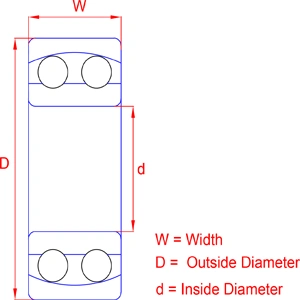
You can use this page to search cylindrical bore bearings, tapered bore bearings, and bearings by inside diameter, outside diameter, width, or bearing number.
This makes it easier to identify a matching replacement bearing during maintenance or design work.
For accurate selection, compare the bearing number, bore size, outer diameter, width, and bore style with your machine requirement or existing sample bearing.